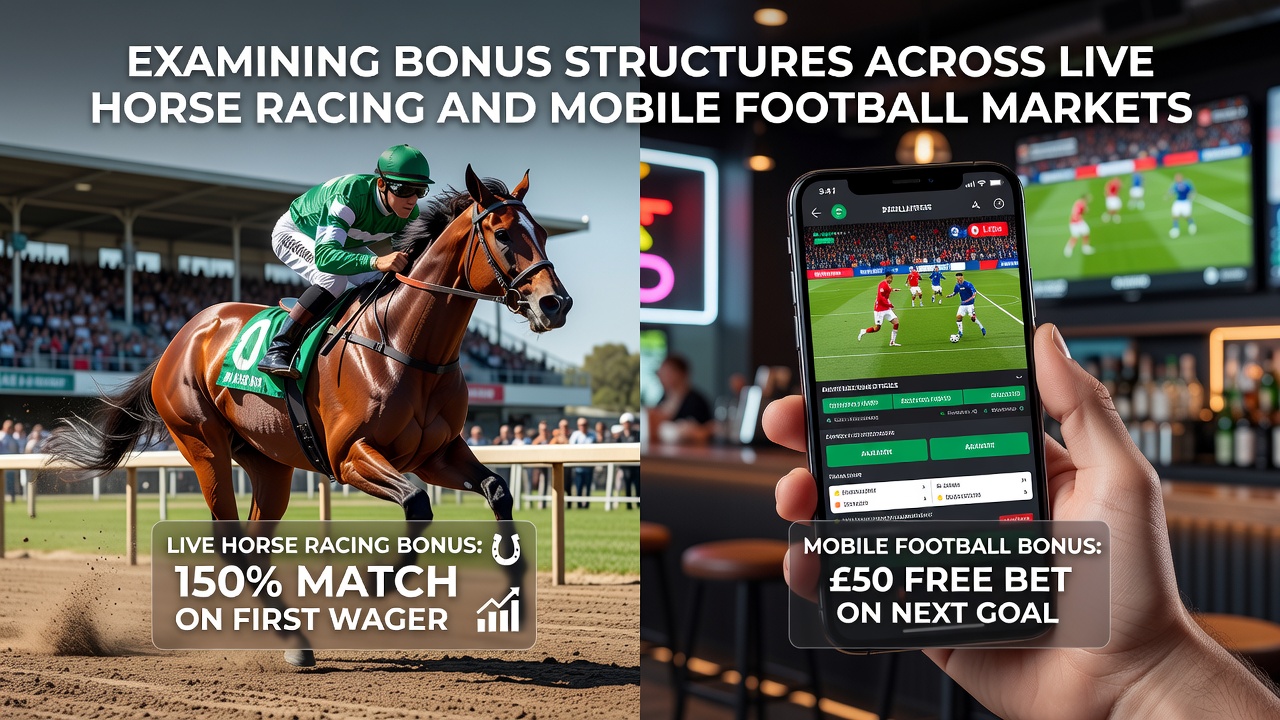
Examining Bonus Structures Across Live Horse Racing and Mobile Football Markets
Bonus structures in betting markets have evolved alongside technology and consumer preferences, with distinct approaches appearing in live horse racing and mobile football environments. Live horse racing platforms often tie promotions to race schedules and track performance data, while mobile football markets emphasize in-play incentives tied to real-time match events. Data from industry reports shows these differences reflect the unique pacing and participant behaviors in each sector, and as of August 2026 regulatory updates in several jurisdictions continue to shape how operators design and disclose these offers.
Bonus Types in Live Horse Racing Markets
Operators in live horse racing frequently structure bonuses around deposit matches that unlock after initial wagers on specific races, along with loyalty points accumulated through repeated bets on thoroughbred or harness events. Cashback programs return a percentage of losses on losing tickets placed during major meetings, and these often scale based on total turnover rather than individual outcomes. Enhanced odds promotions appear before high-profile races such as the Melbourne Cup or Kentucky Derby, where bettors receive improved payouts on selected runners provided they meet minimum stake requirements. Observers note that these structures align with the fixed calendar of racing seasons, which allows platforms to forecast peak activity periods and allocate promotional budgets accordingly.
Research from the American Gaming Association indicates that horse racing bonuses tend to favor retention over acquisition in established markets, with repeat-player rewards including free bets triggered after a set number of qualifying wagers. Free bet credits usually carry wagering requirements that must clear within a defined window, often seven to thirty days depending on the jurisdiction. Those who track platform activity find that live streaming integrations sometimes bundle bonuses with access to exclusive race feeds, creating an additional layer of engagement without altering the core financial terms of the offer.
Bonus Structures in Mobile Football Markets
Mobile football platforms deploy bonuses that respond to the continuous nature of matches, including live betting boosts that activate during halftime or after goals. Deposit match offers commonly apply across multiple deposits within a promotional period, and these frequently extend to accumulator bets where successful multi-leg selections trigger additional payouts. Cashback on losing in-play bets has gained traction, with operators returning portions of stakes on near-miss outcomes such as shots hitting the post or penalties saved. Figures from the European Gaming and Betting Association reveal that mobile football promotions often incorporate referral incentives, where existing users receive credits after new players complete verified deposits and place qualifying bets on league or tournament fixtures.
Many apps integrate bonus triggers with push notifications that alert users to time-sensitive offers, such as increased odds on underdog teams during evening fixtures. Wagering requirements for football bonuses typically range between five and twenty times the bonus amount, though some operators apply lower thresholds to live bet credits to encourage immediate use. Data shows that football markets experience higher volume during major tournaments, prompting platforms to adjust bonus caps and eligibility rules to manage liability exposure across large user bases.

Key Differences and Regulatory Influences
Live horse racing bonuses emphasize scheduled events and long-term loyalty accumulation, whereas mobile football incentives prioritize spontaneous participation during matches. Wagering requirements in horse racing often extend across multiple race days, while football platforms frequently reset requirements after each matchweek. Geographic factors also influence design, with operators in North America adapting horse racing offers to state-specific rules and those in Europe tailoring football promotions to varying tax and consumer protection standards.
According to a 2025 study published by researchers at the University of Nevada, Reno, differences in bonus transparency requirements across jurisdictions affect how clearly operators must disclose rollover conditions and eligible bet types. Platforms serving both markets must therefore maintain separate compliance frameworks, which in turn shapes the technical integration of bonus tracking systems. And while both sectors rely on similar deposit match mechanics, the activation triggers remain tied to the underlying sport's rhythm: race starts for horse betting and kickoffs or in-play moments for football.
Conclusion
Bonus structures continue to adapt as operators respond to technological shifts and regulatory developments in each market. Live horse racing platforms maintain focus on calendar-driven loyalty tools, while mobile football environments leverage real-time triggers to sustain engagement. Evidence from regulatory filings and industry analyses demonstrates that these approaches reflect the operational realities of each sport rather than interchangeable marketing tactics. Those monitoring developments through August 2026 and beyond will likely observe further refinements as data analytics improve targeting and as authorities standardize disclosure practices across regions.